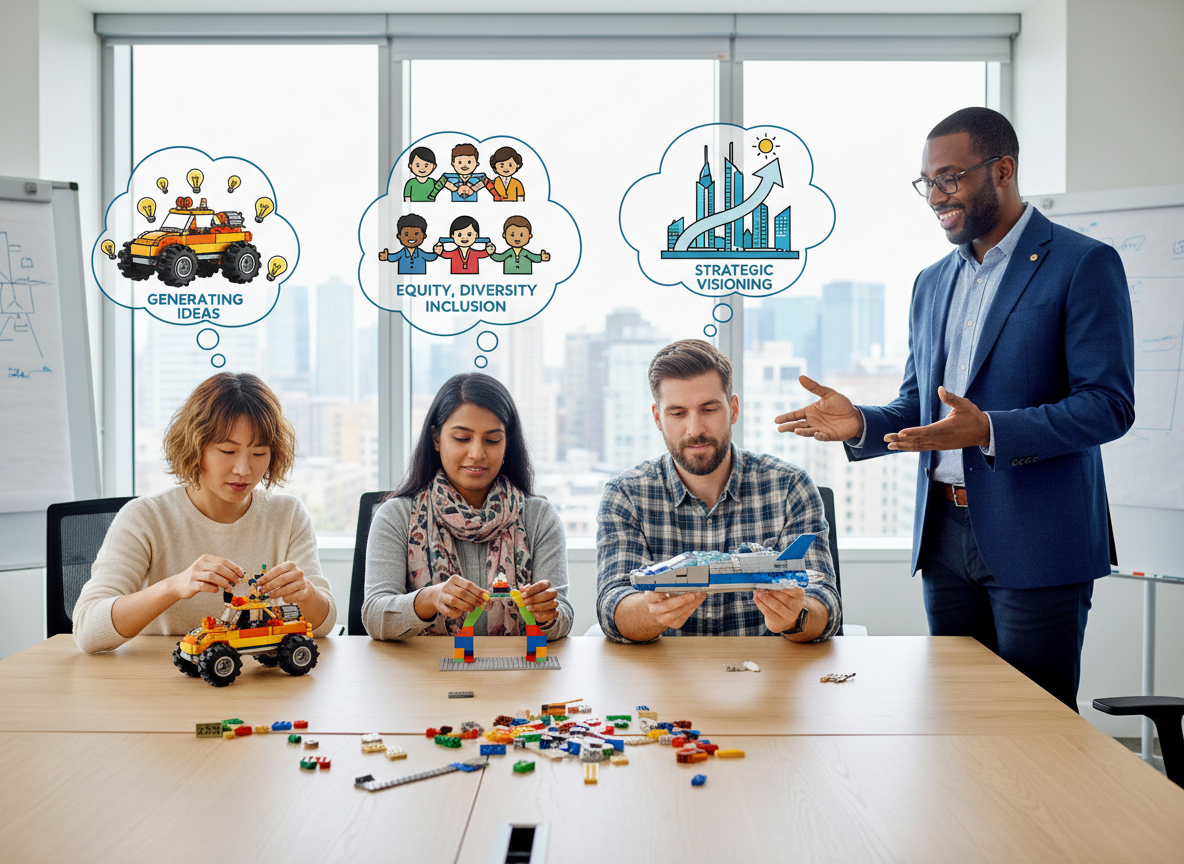
This is not LEGO robotics or technical building. There is no coding or expectation of expertise. Students build with simple materials, and the focus is not on what they produce, but on how they interpret a task and explain their thinking.
The workshop begins with short, engaging challenges such as building the tallest tower, creating a bridge with limited pieces, or representing an abstract idea. These activities are sometimes lightly competitive and are designed to get students participating quickly. What matters is how they justify their build and make their thinking visible.
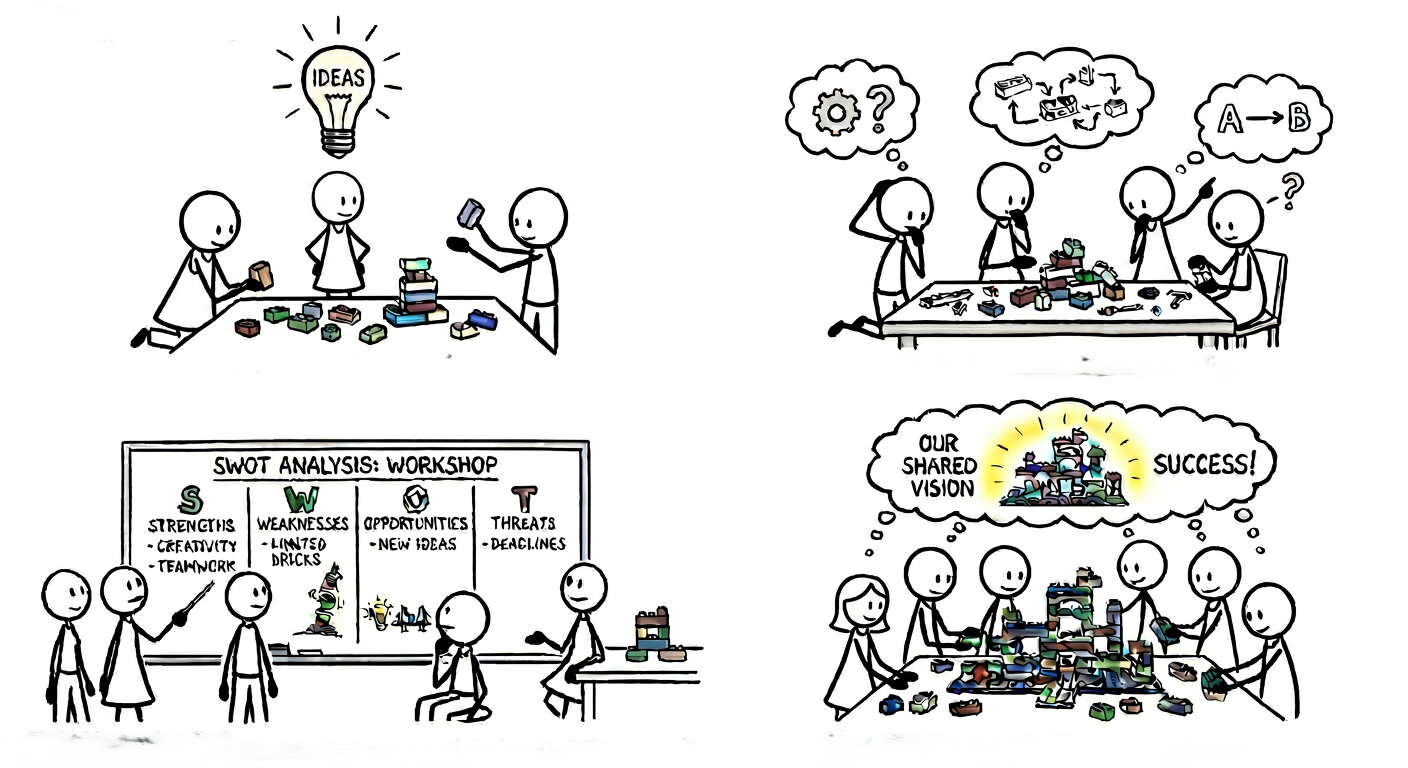
The session then shifts. Students use builds to explore ideas about themselves, including strengths, goals, challenges, and how they experience school. Prompts are intentionally open so students can define them in ways that feel meaningful. This becomes a form of experience mapping, where students make visible where they feel confident, where they feel stretched, where they feel supported, and where they feel challenged. The process can function like group advising or counseling, without feeling like it.
The outcome is a shift in how students see problem solving and themselves. They begin to recognize that their ideas have value and that challenges can be approached with the tools they already have.
This workshop follows the same structure, beginning with short, non-technical problem-solving builds that emphasize interpretation and multiple perspectives. These moments create an accessible entry point and are revisited throughout the session to maintain engagement.
Builds are then used to represent experiences within the school environment, including team dynamics, burnout, and shifting responsibilities. Participants move through a structured process that blends multiple lenses. They identify strengths and pressures, map assets and barriers, and compare the current state of their environment with where they want it to be. This allows for both honest reflection and forward-looking alignment without the process feeling rigid or overly formal.
The result is clearer alignment, stronger communication, and a shared understanding of how to move forward, grounded in how people actually experience their work.
When priorities compete and direction becomes diffuse, these sessions help leadership make tradeoffs visible and decisions explicit.
Sensitive conversations around equity and difference are approached through structured, facilitated engagement.
These sessions bring executives, managers, and frontline staff into a single structured space.
Create conditions where unspoken dynamics can be expressed constructively.
For over eight years, I have designed and facilitated serious play style workshops across boardroom settings, team environments, education spaces, and youth focused programs. Sessions often include LEGO and other simple hands-on tools. The purpose is to lower defenses so groups can surface what is usually hard to say, explore options faster, and move toward shared clarity.
I combine facilitation with research based techniques for data gathering, coding, and synthesis. Organizations can receive tailored deliverables such as thematic summaries, decision logs, and management ready reports. Reporting can draw on qualitative and quantitative approaches depending on the goal and the engagement format.
This work draws inspiration from serious play style facilitation. It does not claim LEGO Serious Play certification.
Sessions can be two hours, three hours, half day, full day, or a three day engagement that brings in different stakeholder groups. Group sizes can be four to twenty. The ideal size is eight to twelve.
We start with a short discovery conversation to clarify outcomes and participants. I then design the session structure and any light prework. We run the workshop and close with clear themes, decisions, and next steps.
Documentation can include a synthesis memo, leadership ready recommendations, or visual documentation when useful. Scope depends on your goals, session length, and how many stakeholder groups are involved.
Every engagement is custom scoped. Format, duration, and documentation are designed around your objectives.
Email a brief description of your goal and timeline, and I will provide a clear proposal.
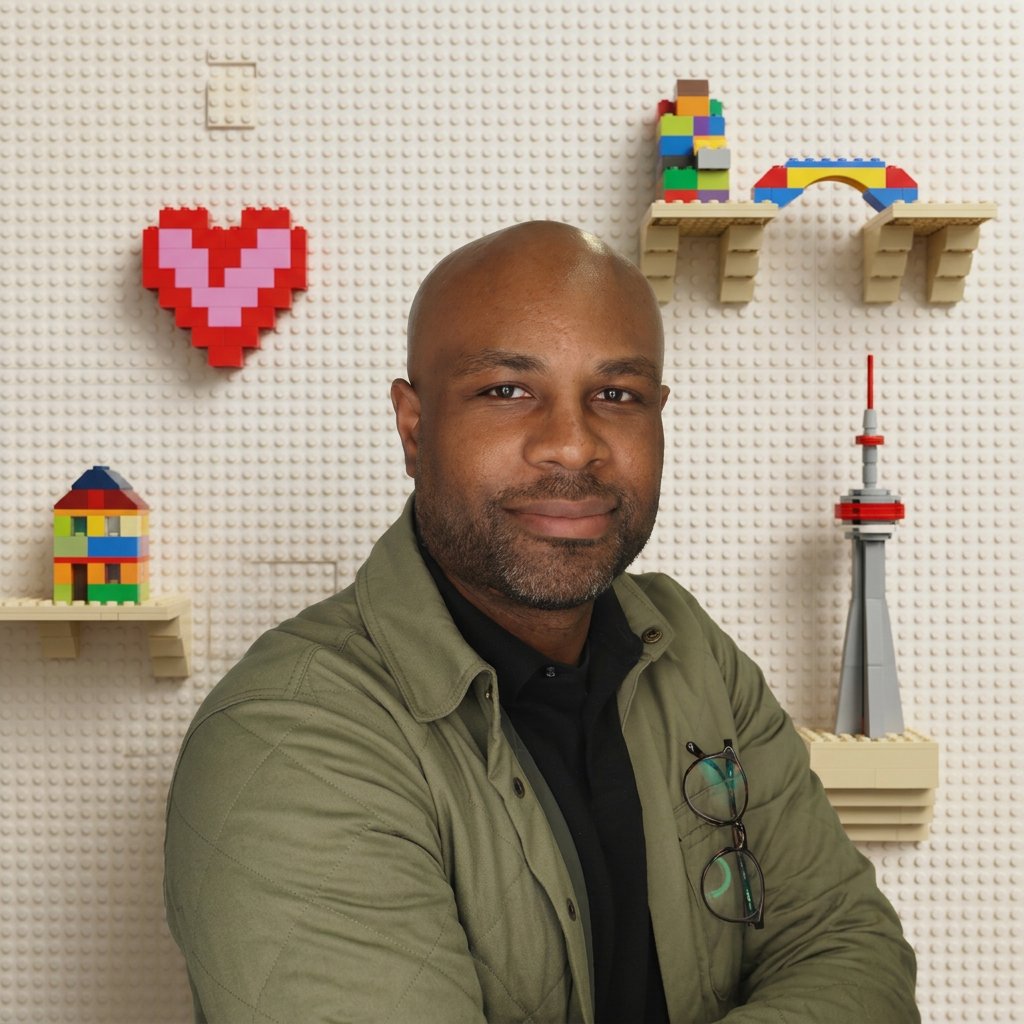
Ikee Gibson
Facilitator · Toronto, Ontario
Ikee Gibson is a PhD candidate whose work examines how organizations interpret and respond to change, particularly in the context of shifting populations and evolving institutional demands.
His research draws on organizational theory, culture, and stratification to understand how people make sense of complexity and how those interpretations shape everyday practice.
Alongside this work, Ikee has a longstanding interest in problem solving, especially in team environments where progress depends on how people think together. His facilitation builds from that interest. Using structured, hands-on methods grounded in play, he creates space for groups to surface insight, rethink assumptions, and move toward shared clarity. In this context, play is not a break from the work. It is a way of doing the work differently, reducing monotony, inviting participation, and often unlocking forms of thinking that more conventional approaches miss.
You can reach Ikee directly at ikee@hackingthesyllabus.ca or 647-300-4904.
Email: ikee@hackingthesyllabus.ca